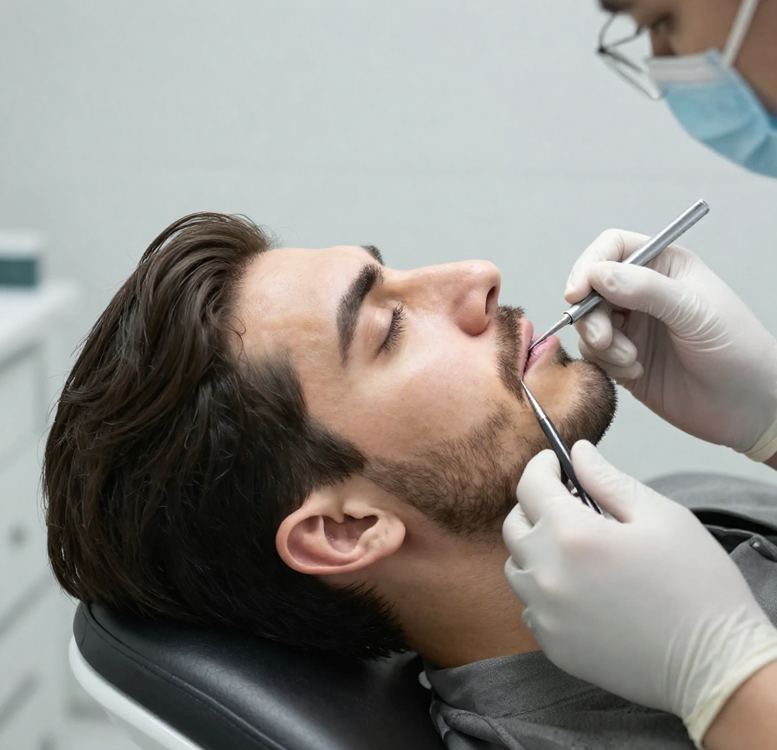
Have you tried growing a moustache and felt like it just stops halfway?
You wait. You trim. You give it time. Still, a few areas refuse to fill in. It can be frustrating, especially when everything else about your look feels right.
The good news? There's a reliable fix—and it doesn't look artificial or overdone.
What is a moustache transplant?
A moustache hair transplant is a cosmetic procedure where your own hair is used to improve the density and shape of your moustache.
Nothing synthetic here.
Hair follicles are taken from the back portion of your scalp—this area usually has steady, healthy growth. These are then placed carefully into the moustache region to match how facial hair naturally grows.
The idea isn't just to "add hair." It's to create something that suits your face and blends in naturally.
People usually consider this when:
- Growth is uneven or patchy
- The moustache looks thin even after months of growth.
- There's a visible gap due to a scar or past skin issue.
How is the procedure done?
It's more precise than complicated.
The process starts with extracting individual hair follicles from the donor area. Doctors pick follicles that are closest in texture to facial hair. A very fine tool is used, so the area heals without noticeable marks.
Once that's done, attention shifts to design.
Using the DHI (Direct Hair Implantation) method, each follicle is placed into the moustache area with care. Direction matters. Angle matters. Even spacing matters.
That's what makes the final result look like it was always meant to be there.
There are no large cuts or stitches involved. Most people go through the procedure without much discomfort.
What to expect after the procedure?
You don't have to plan a long break from your routine. Right after the session, you can head home. For a couple of days, the area might feel slightly sensitive. A bit of redness or tiny scabs can show up—this is just part of normal healing. A few simple precautions make a difference:
- Avoid touching or picking the area
- Skip heavy physical activity for a short while
- Stick to the aftercare routine your doctor suggests
Within days, things start settling down. Most people don't find this phase difficult at all.
When will you see results?
This is where patience quietly does its job.
- First few days: Slight redness or mild swelling may be visible
- First week: Small scabs form and fall off naturally
- 2–4 weeks: The follicles stay inactive under the skin
- 1–3 months: Fresh hair begins to grow
- 6–9 months: The moustache looks fuller and well-defined
It's not instant. But it builds up in a way that feels natural.
